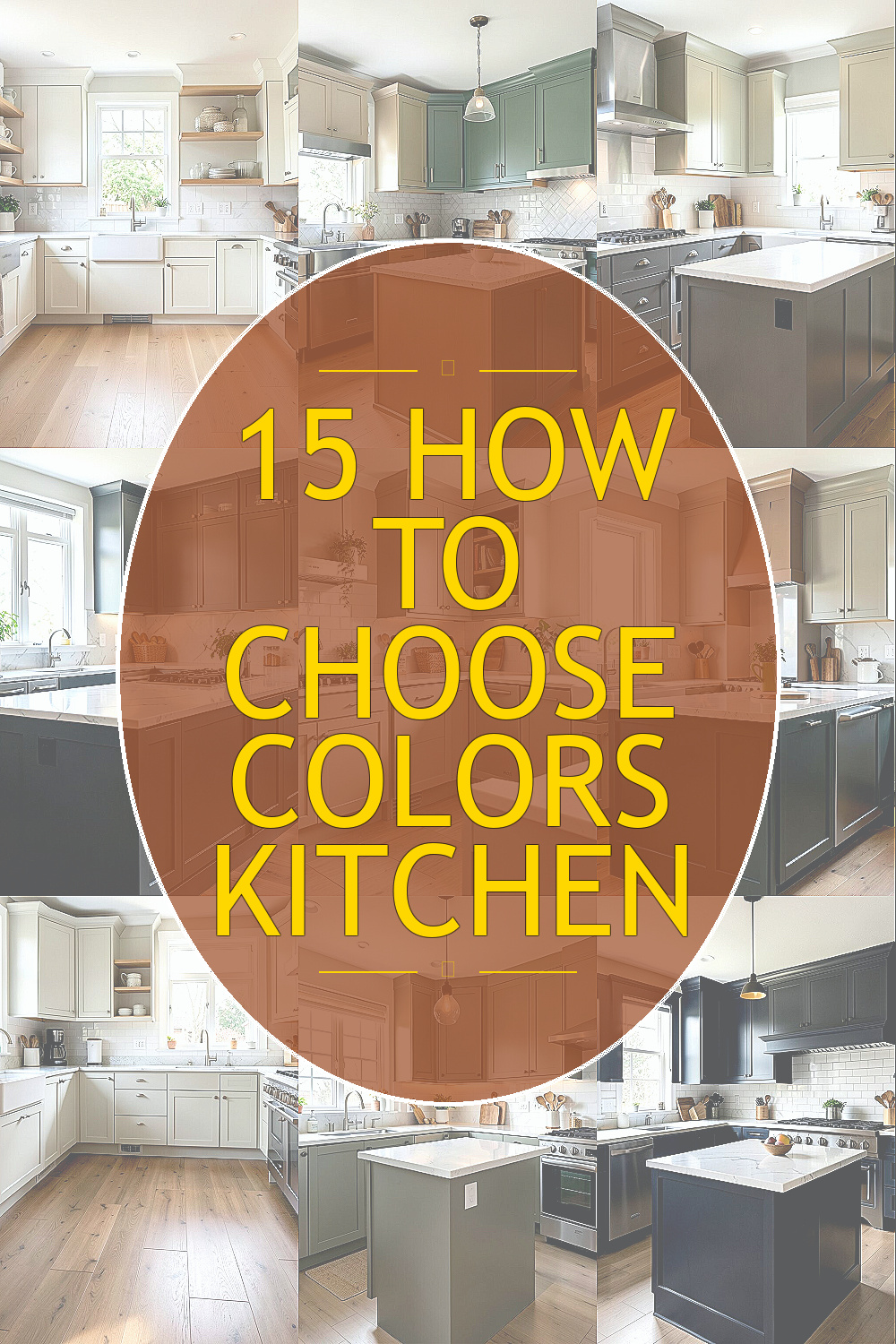
Picking kitchen colors can feel hard, but a few simple steps can make it much easier. Good color choices can help a kitchen feel calm, bright, clean, and more like home.
1. Start With the Light in Your Kitchen
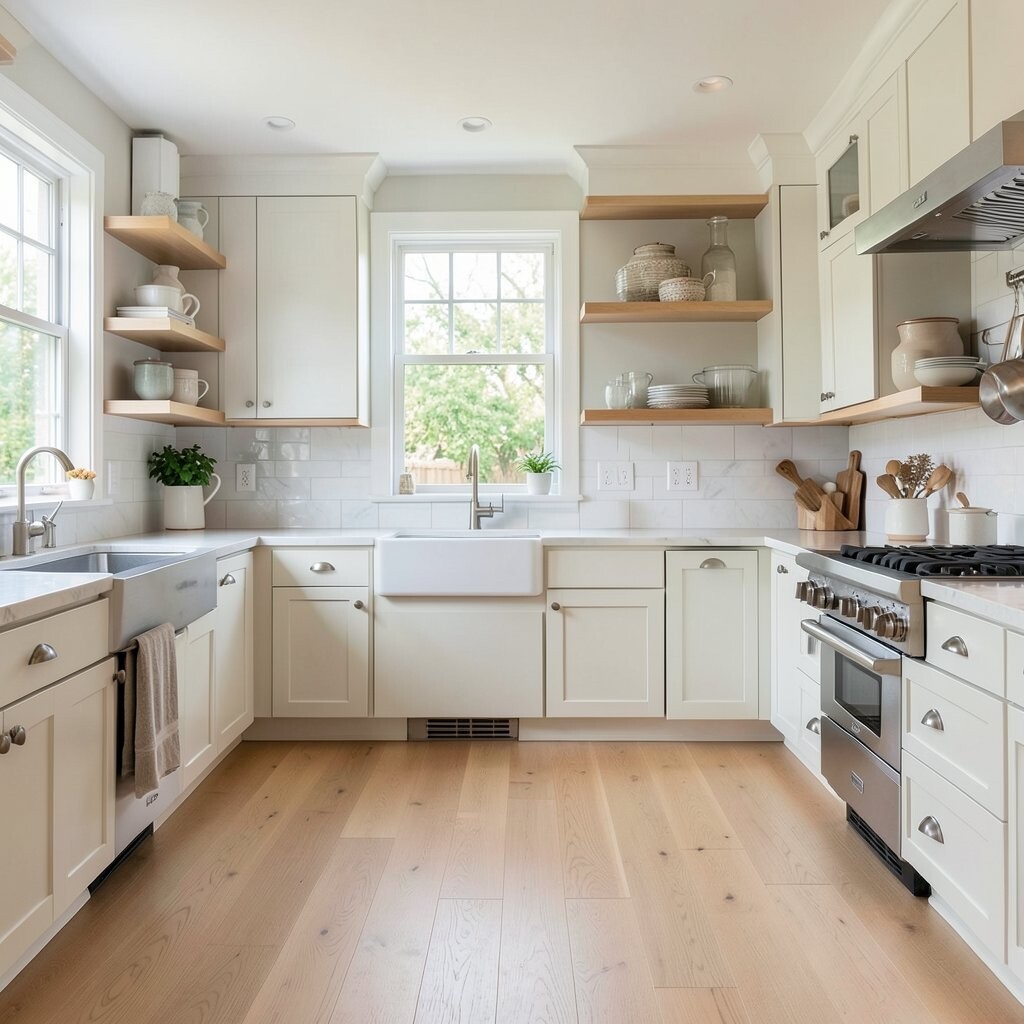
Look at how much natural light your kitchen gets during the day. A room with a lot of sun can handle darker colors, while a dim room often looks better with light shades.
Paint and cabinet colors can change a lot under warm bulbs or cool bulbs. Try color samples at different times of day so you can see the real look before you spend money.
This step helps you avoid a color that looks nice in the store but wrong at home. It also saves cost because you are less likely to repaint or replace things later.
2. Match Colors to Your Cabinets
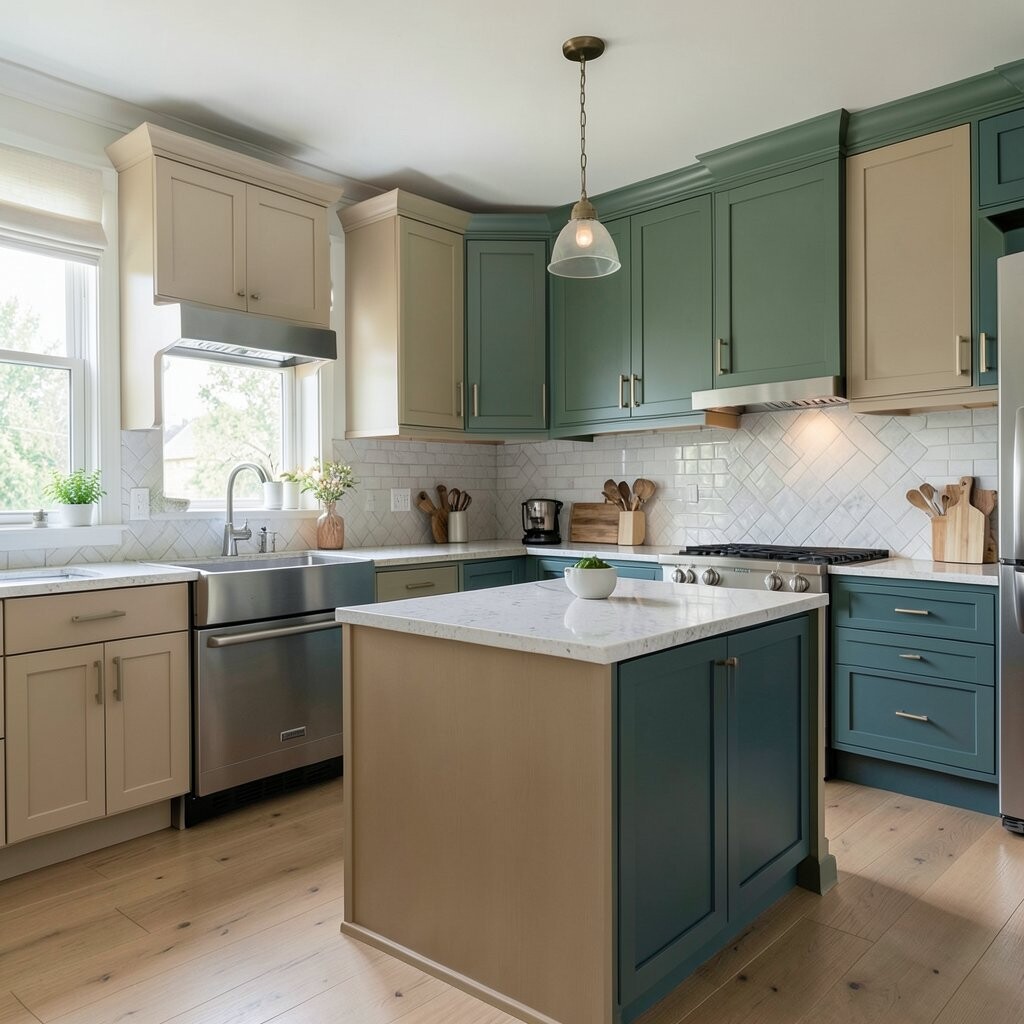
Cabinets take up a lot of space, so they should guide your color plan. White cabinets feel fresh and open, while wood cabinets can add warmth and a more natural look.
If your cabinets are dark, you may want lighter walls and counters to keep the room from feeling heavy. If your cabinets are light, you can use soft gray, blue, or green to add some style.
This is a simple way to make the room feel balanced. It also helps your kitchen look neat without needing a full and costly remake.
3. Use a Color Mood You Like
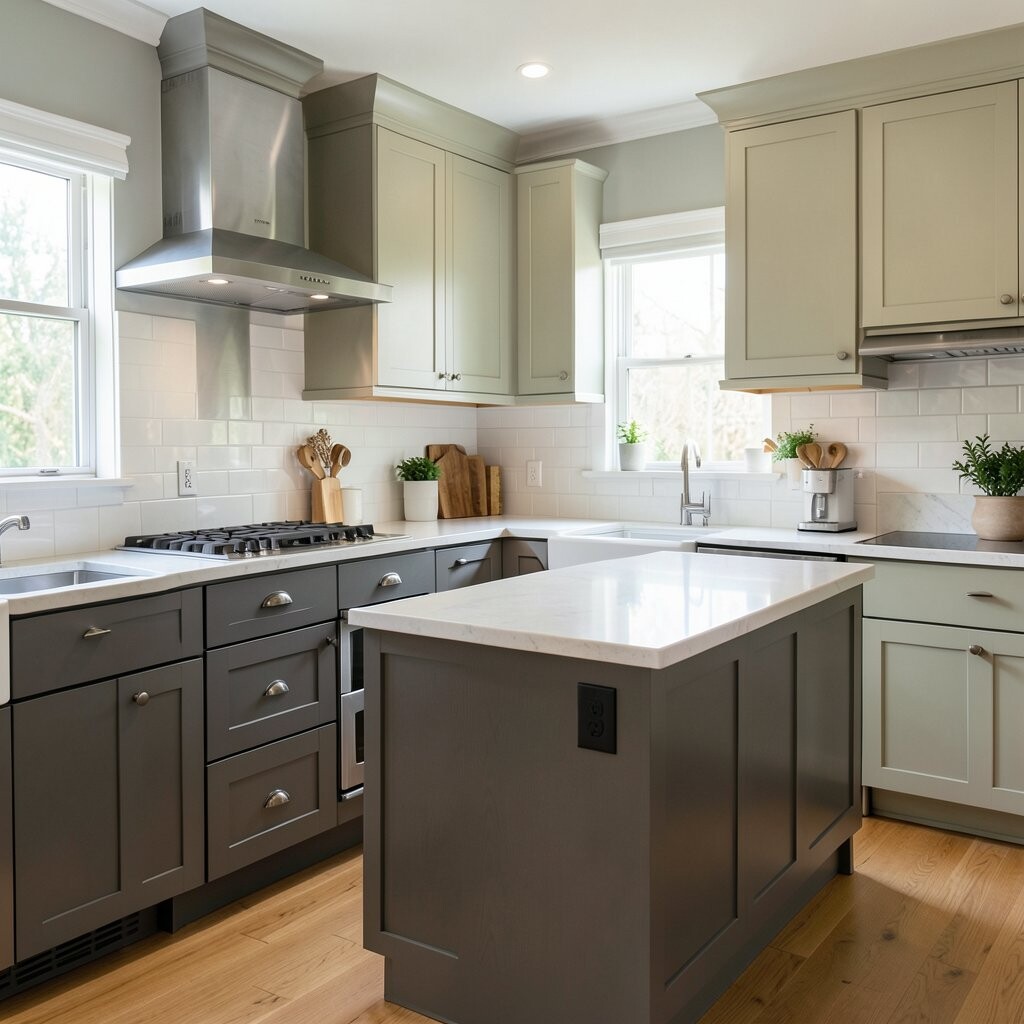
Think about the mood you want each day when you walk into the kitchen. Soft colors can feel calm, while brighter colors can feel lively and cheerful.
A blue kitchen often feels cool and clean, while warm beige or cream can feel cozy. Green can bring a fresh look that works well with plants, wood, and plain white dishes.
Choosing a mood first helps you avoid random color picks. It also makes the room feel more personal, which is one of the best parts of kitchen design.
4. Keep the Countertops in Mind
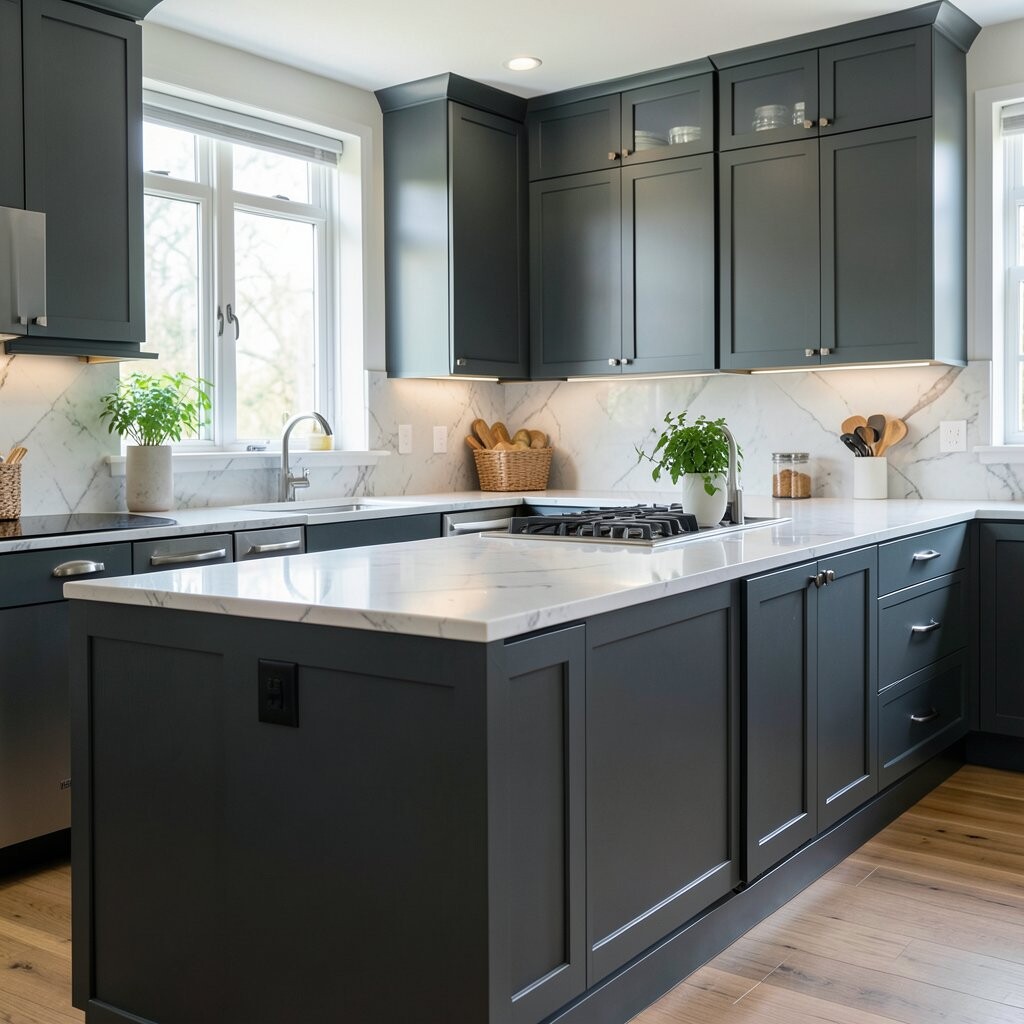
Countertops are another big part of the room, so they should work with your color plan. A busy stone pattern may need simple wall colors, while a plain counter can let you use more color elsewhere.
White quartz, gray stone, and speckled tops each give a different feel. If you already have counters you like, use them as the base and build the rest of the room around them.
This can save money because you may not need to replace the counters at all. It also helps the whole space feel more put together and less random.
5. Try a Soft Neutral Base
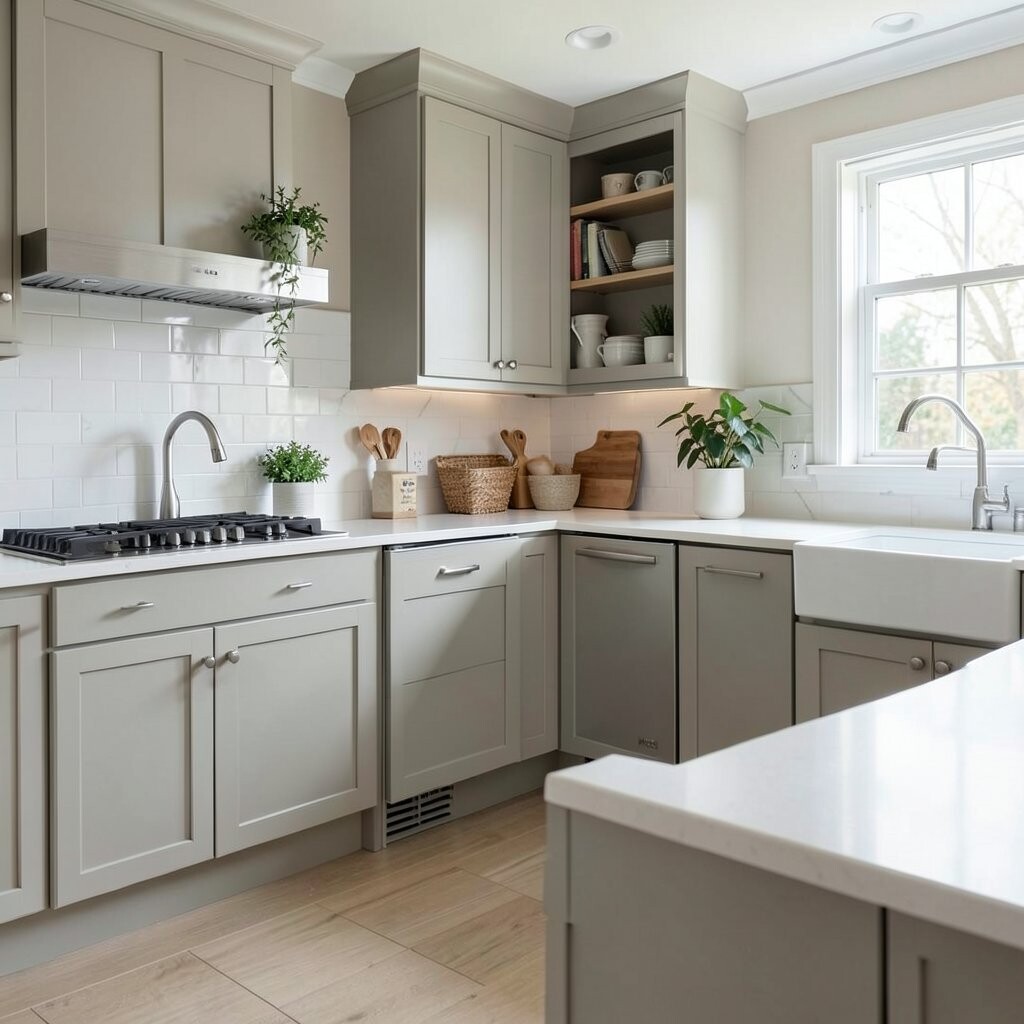
Neutral colors like white, cream, gray, and beige are popular for a reason. They look clean, work with many styles, and are easy to update later with small decor changes.
A soft neutral base also gives you room to use color in other places, like stools, rugs, or dishes. This can be a smart choice if you like to change your look from time to time.
Many current kitchen trends use warm neutrals instead of harsh bright white. These shades can feel more gentle and can make the room look more lived in and less cold.
6. Add One Strong Color With Care
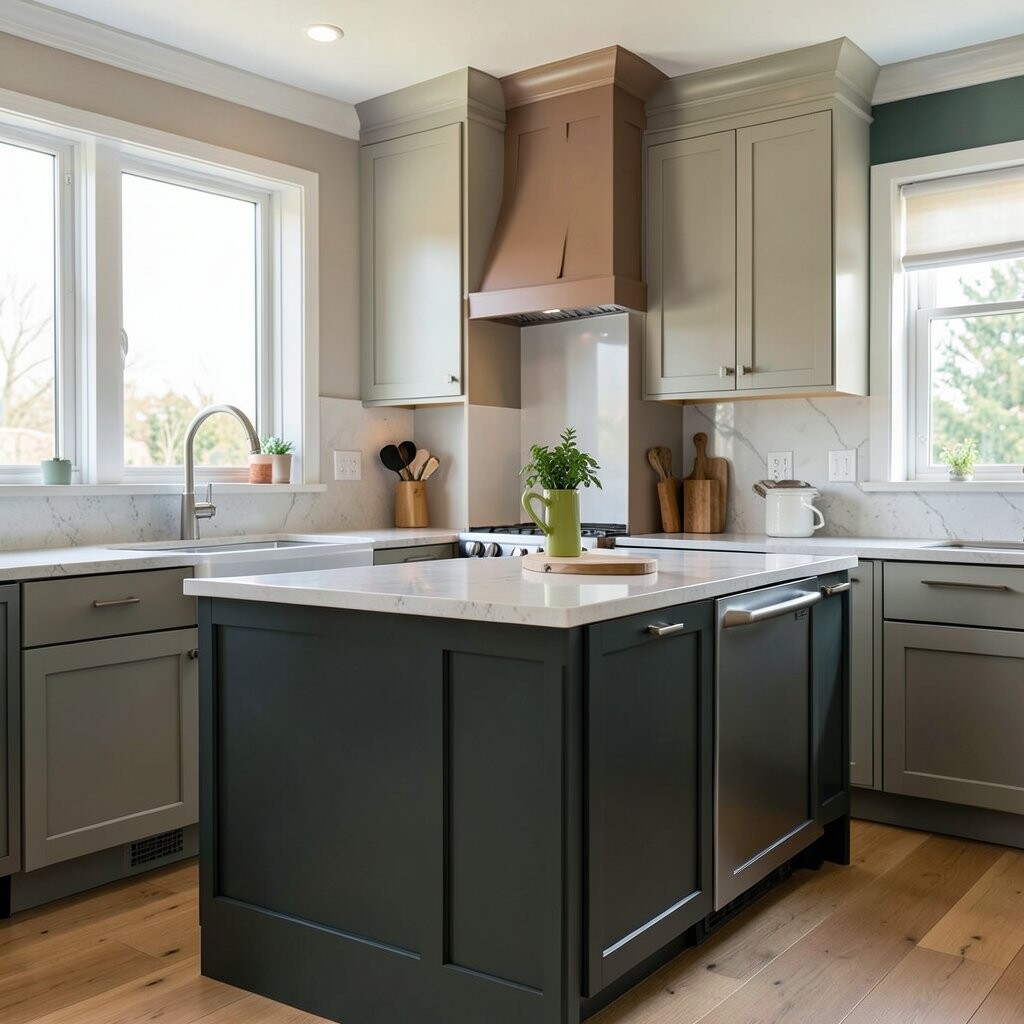
A single strong color can give a kitchen a clear style without making it feel too busy. Deep navy, forest green, or rich red can work well on one wall, an island, or lower cabinets.
The key is to use that bold color in a small, planned way. Too much strong color can make a room feel tight, but the right amount can give it a unique look.
This is a good option if you want something with more personality. It can also be cheaper than changing every part of the kitchen.
7. Think About the Floor Color
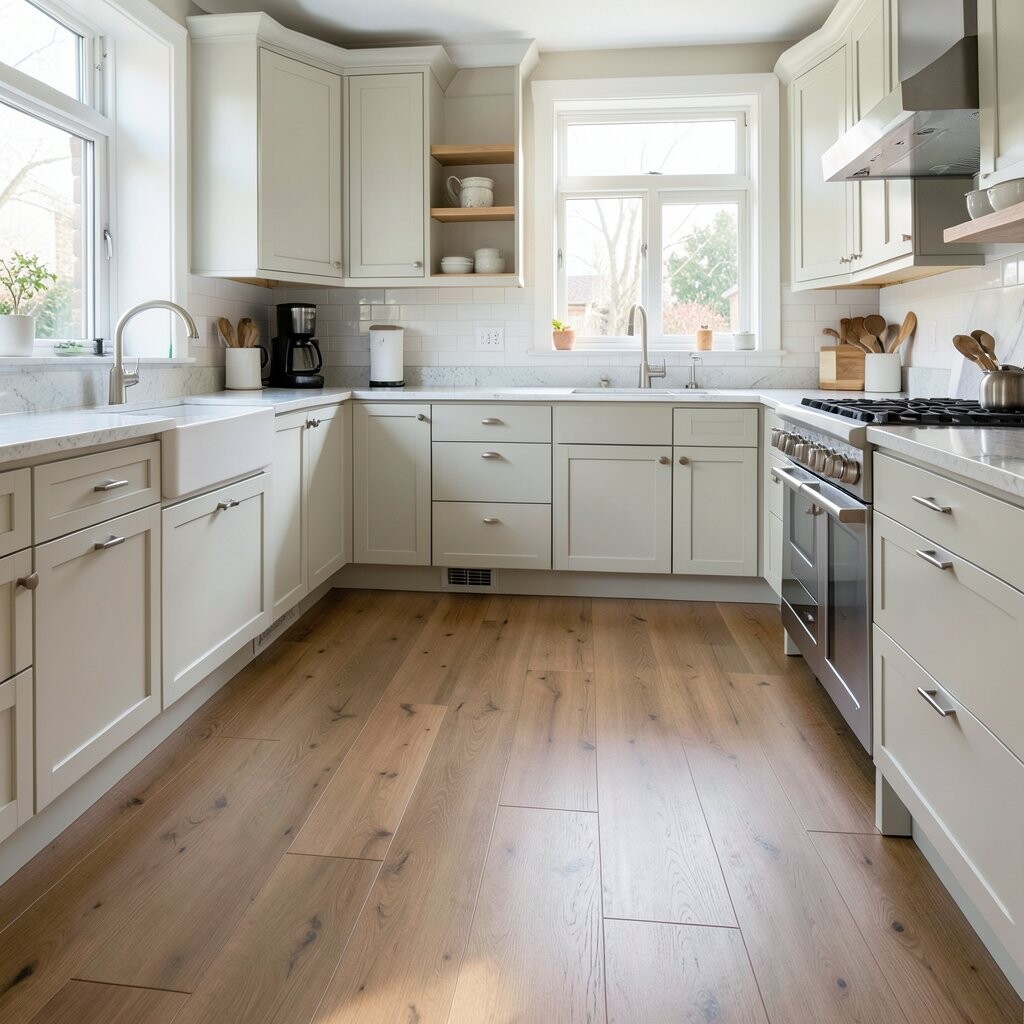
Floor color matters because it sits under everything else in the room. Light floors can make a kitchen feel open, while dark floors can add depth and hide some dirt marks.
If your floor has warm wood tones, try colors that match that warmth, such as cream, soft green, or tan. If your floor is gray or black, cooler colors may fit better.
Looking at the floor first can keep the room from feeling split into parts. It helps the walls, cabinets, and counters work as one easy, clear design.
8. Use Color to Make a Small Kitchen Feel Bigger
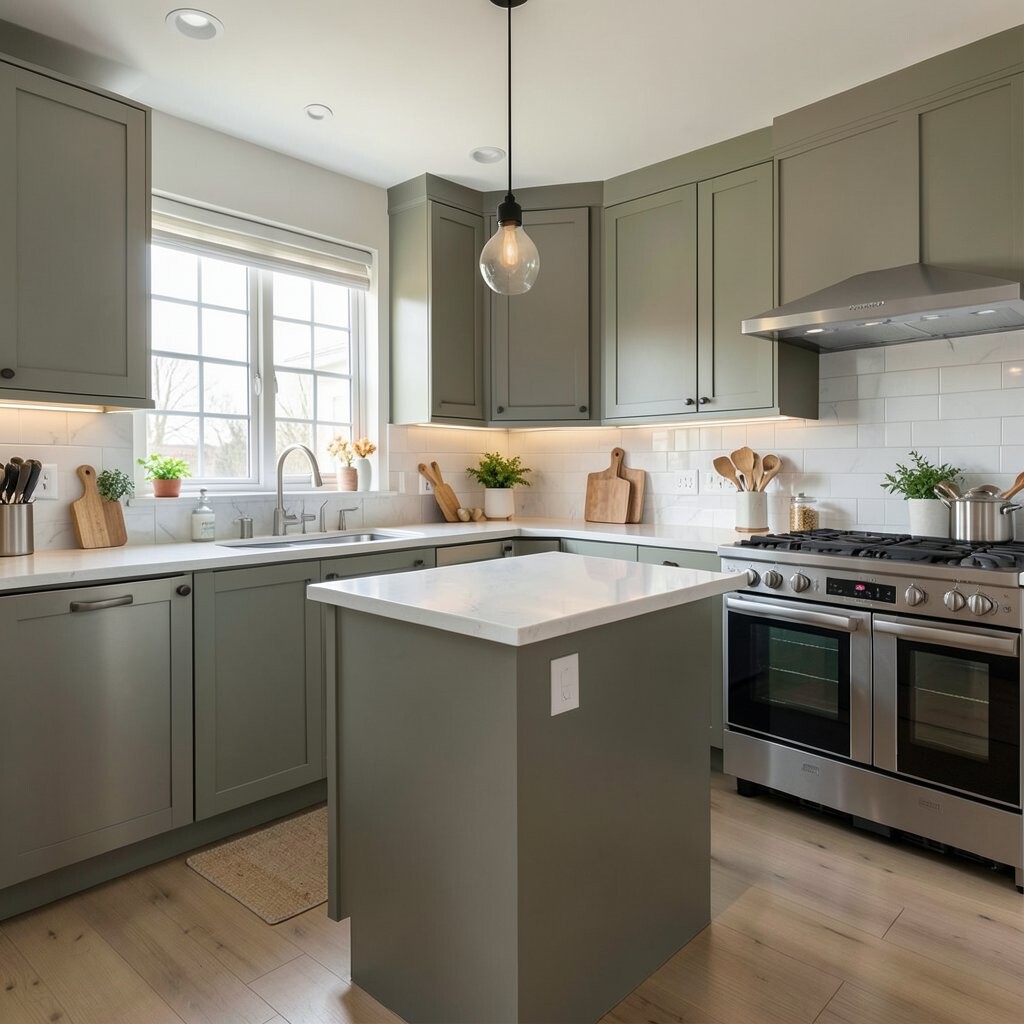
Light colors can help a small kitchen feel wider and less crowded. White, pale blue, soft gray, and light beige often work well in tight spaces.
You can also use the same color on walls and cabinets to cut down on visual breaks. That simple trick can make the eye move more smoothly across the room.
This is a good way to get a fresh look without spending a lot. Paint is usually much cheaper than new cabinets, so it can be a smart fix for a small room.
9. Use Dark Colors for a Strong Look
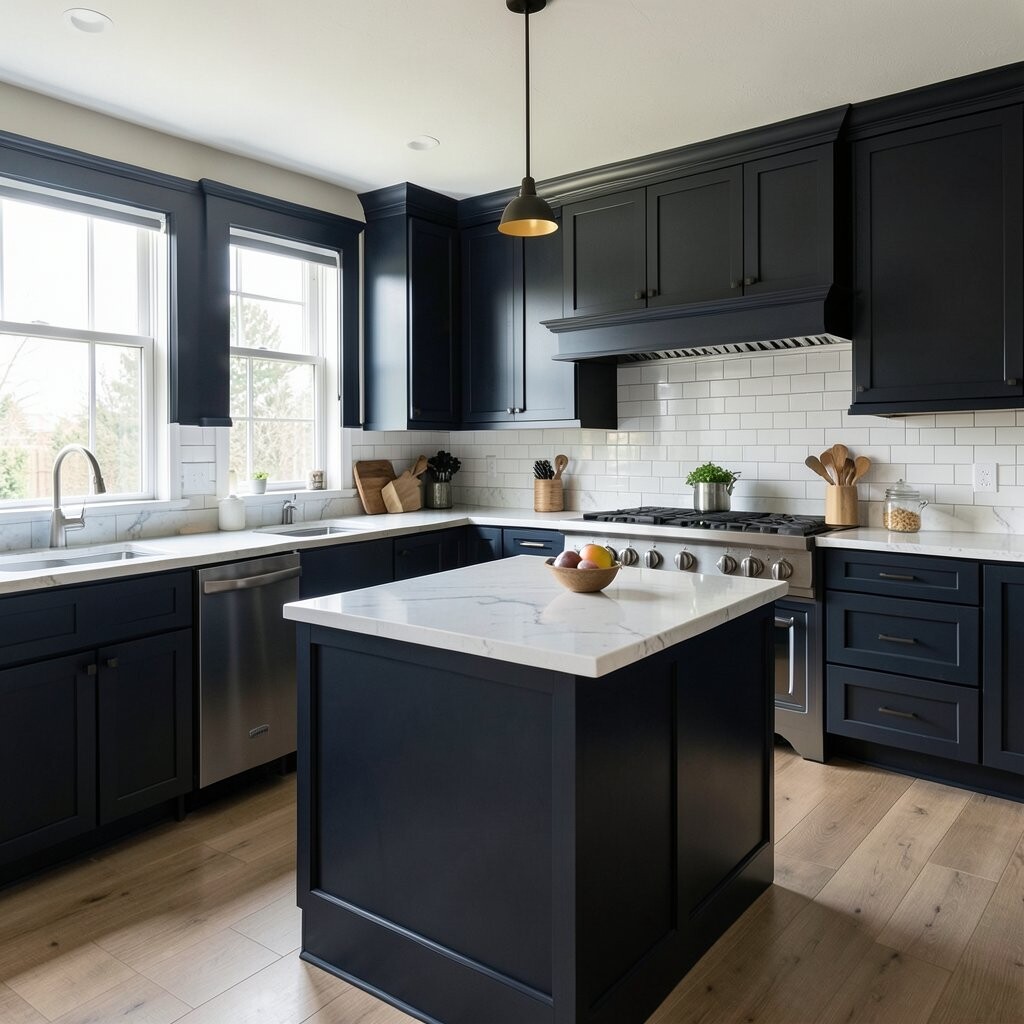
Dark colors can make a kitchen feel rich and grounded when they are used well. Deep green, charcoal, and navy can look very good with light counters and bright lights.
These shades stand out in a clean, simple way and can make the room feel more grown up. They also hide some marks and stains better than very light colors.
If you like a bold but calm style, dark colors may be a good fit. Just make sure the room has enough light so it does not feel heavy or closed in.
10. Look at the Color of Your Appliances
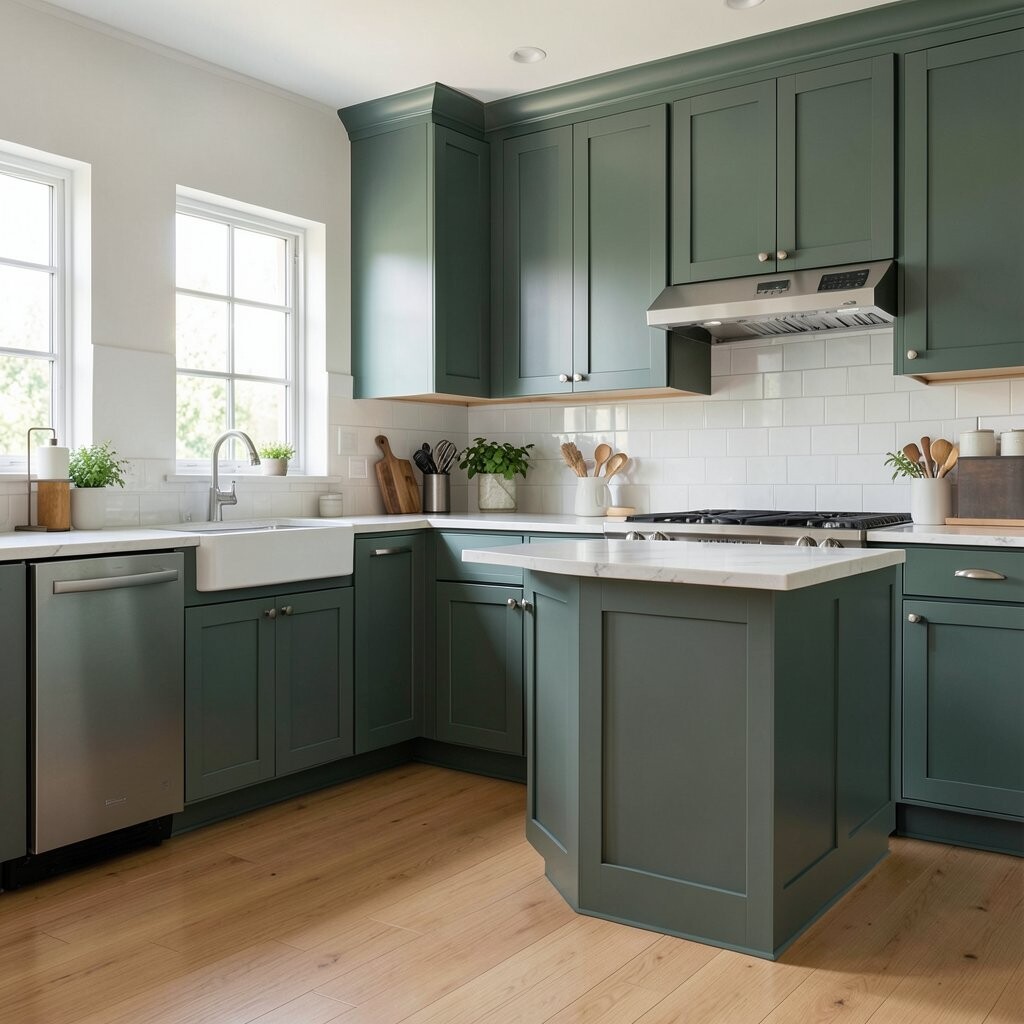
Appliances can change the whole feel of a kitchen, so do not ignore them. Stainless steel, black, and white appliances each work best with different wall and cabinet colors.
Black appliances can look sharp with light cabinets, while stainless steel often fits many styles. If you have older appliances, choosing a wall color that helps them blend in can make the room feel more tidy.
This can be a smart way to work with what you already own. It may save money because you do not need to replace working appliances just for looks.
11. Use Warm Colors for a Cozy Feel
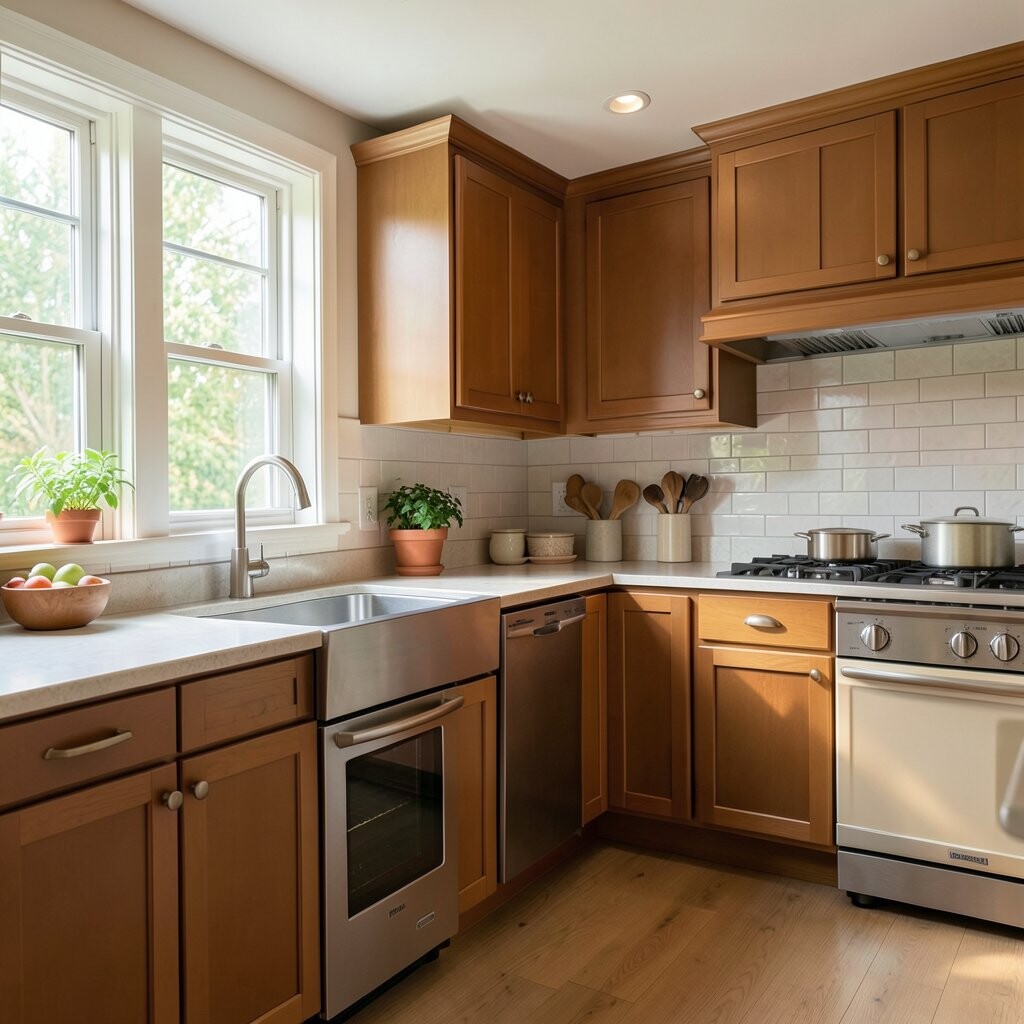
Warm colors like soft yellow, cream, peach, tan, and warm gray can make a kitchen feel friendly and calm. These shades work well in homes where the kitchen is used for long meals and family time.
Warm colors also pair well with wood shelves, brown floors, and natural baskets. They can make a plain room feel more welcoming without using bright or loud shades.
If you want a space that feels easy to live in, warm colors are worth trying. They are also a safe choice if you plan to sell your home later, since many people like them.
12. Use Cool Colors for a Fresh Feel
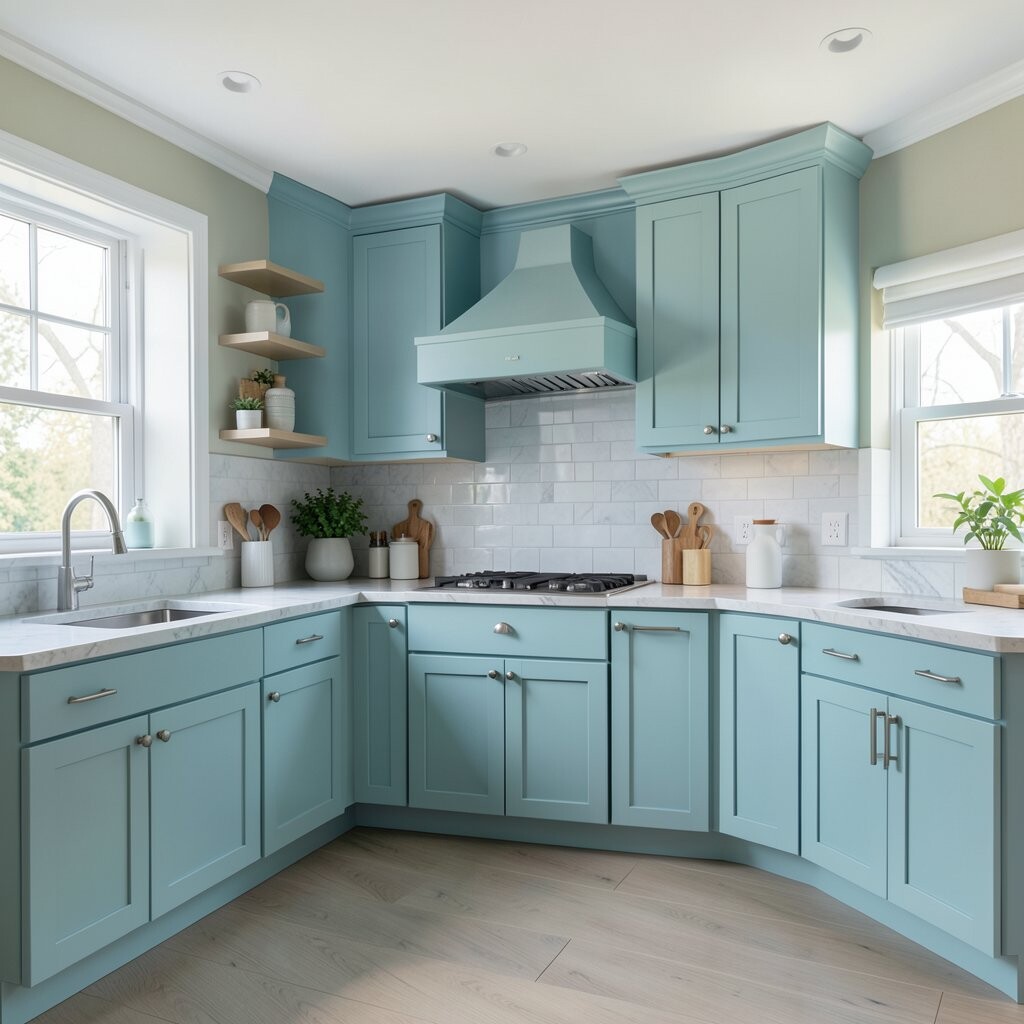
Cool colors like blue, green, and soft gray can make a kitchen feel clean and fresh. They often work well in rooms with lots of light and simple white trim.
These colors can also help a busy kitchen feel calmer. If your room gets hot or feels crowded, cool shades may make it seem more open and easy to use.
Cool colors are a nice choice for a modern look. They can also be matched with low-cost items like plain towels, white dishes, and simple wall art.
13. Try a Two-Color Plan
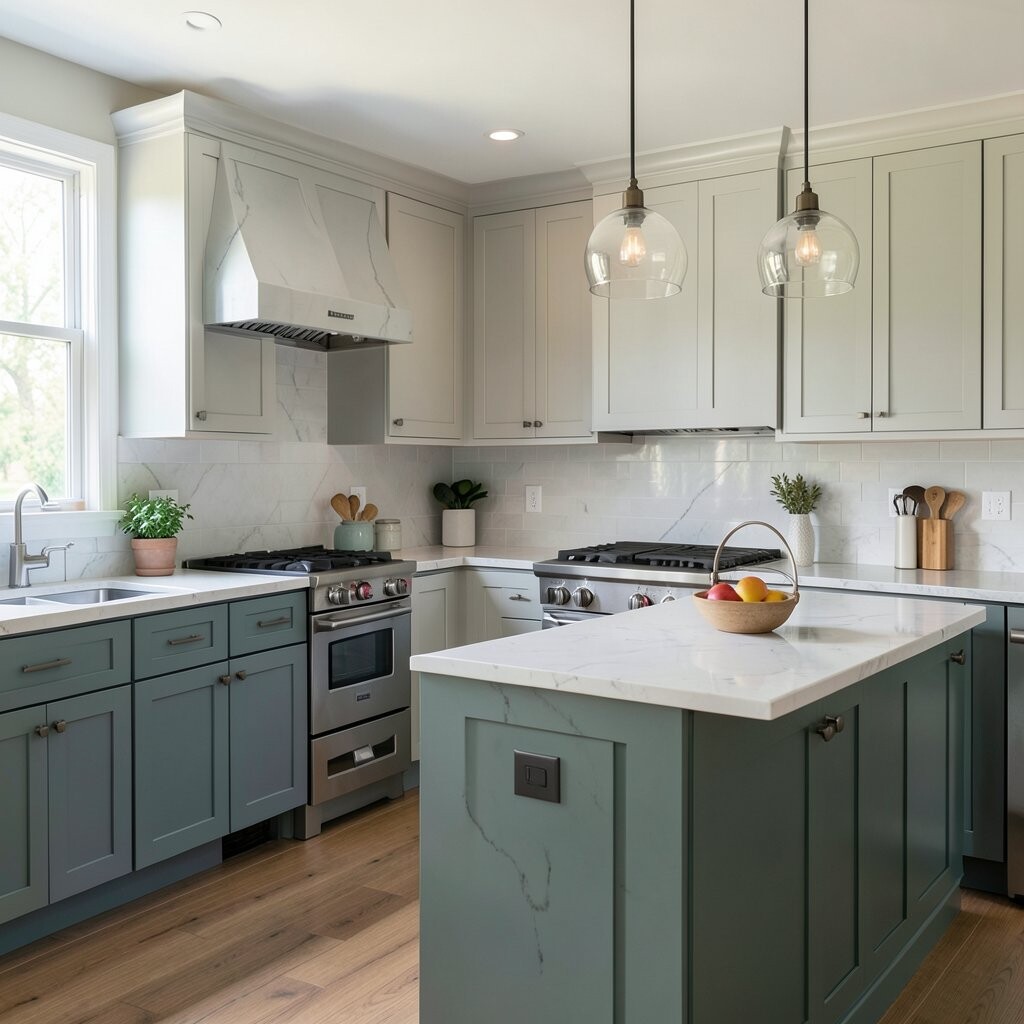
Using two main colors can add style without making the room messy. A common idea is to use one color for cabinets and another for walls or the island.
This gives the kitchen more shape and can make special parts stand out. For example, white upper cabinets with blue lower cabinets can look neat and fresh.
A two-color plan also gives you room to show your own taste. It can be done with paint, which makes it a lower-cost choice than buying new materials.
14. Pay Attention to Small Details
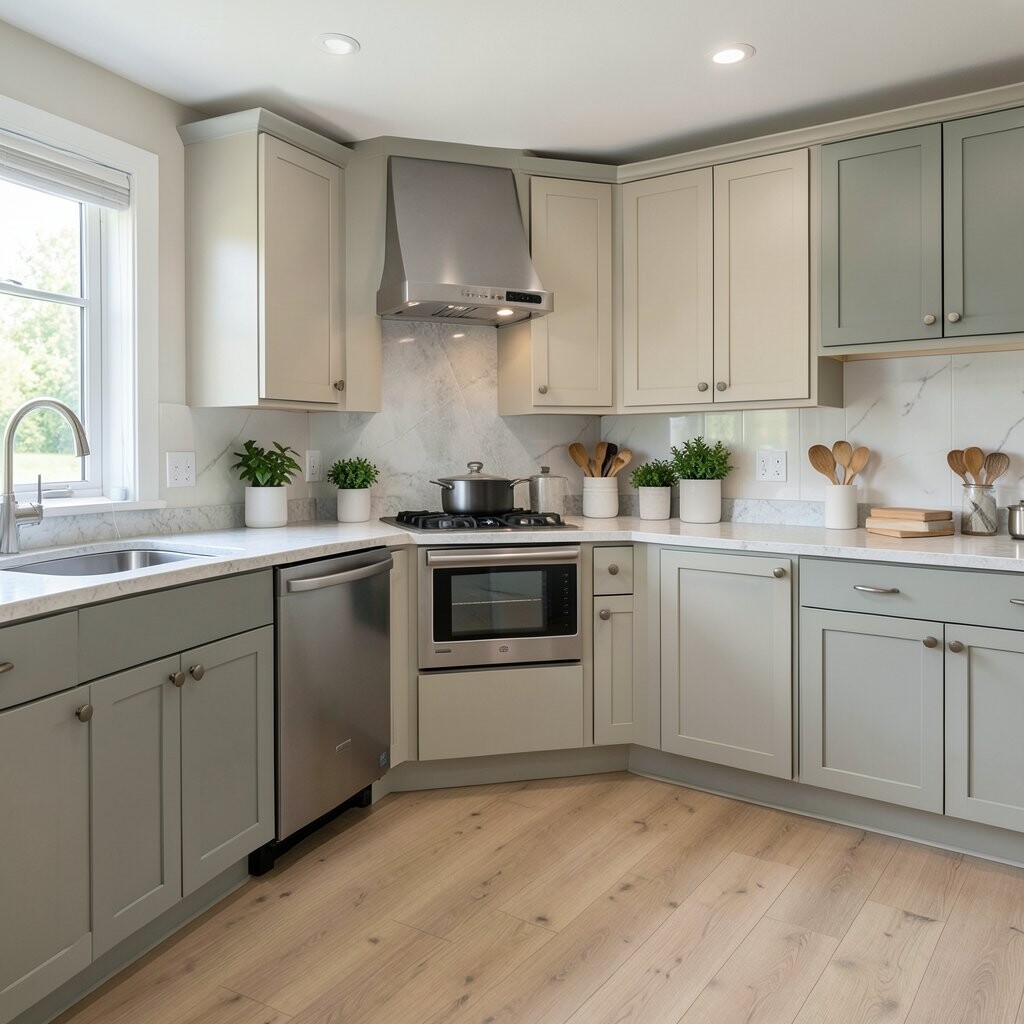
Small parts like knobs, handles, chairs, and curtains can change how the main colors feel. A gold handle can make a white kitchen feel warmer, while black hardware can make it feel sharper.
Even a small rug or fruit bowl can help tie the colors together. These little touches are useful if you want to try a trend without making a big change.
Details are a good place to test your style before spending more money. They can help you see if a color plan feels right in daily use.
15. Test Samples Before You Choose
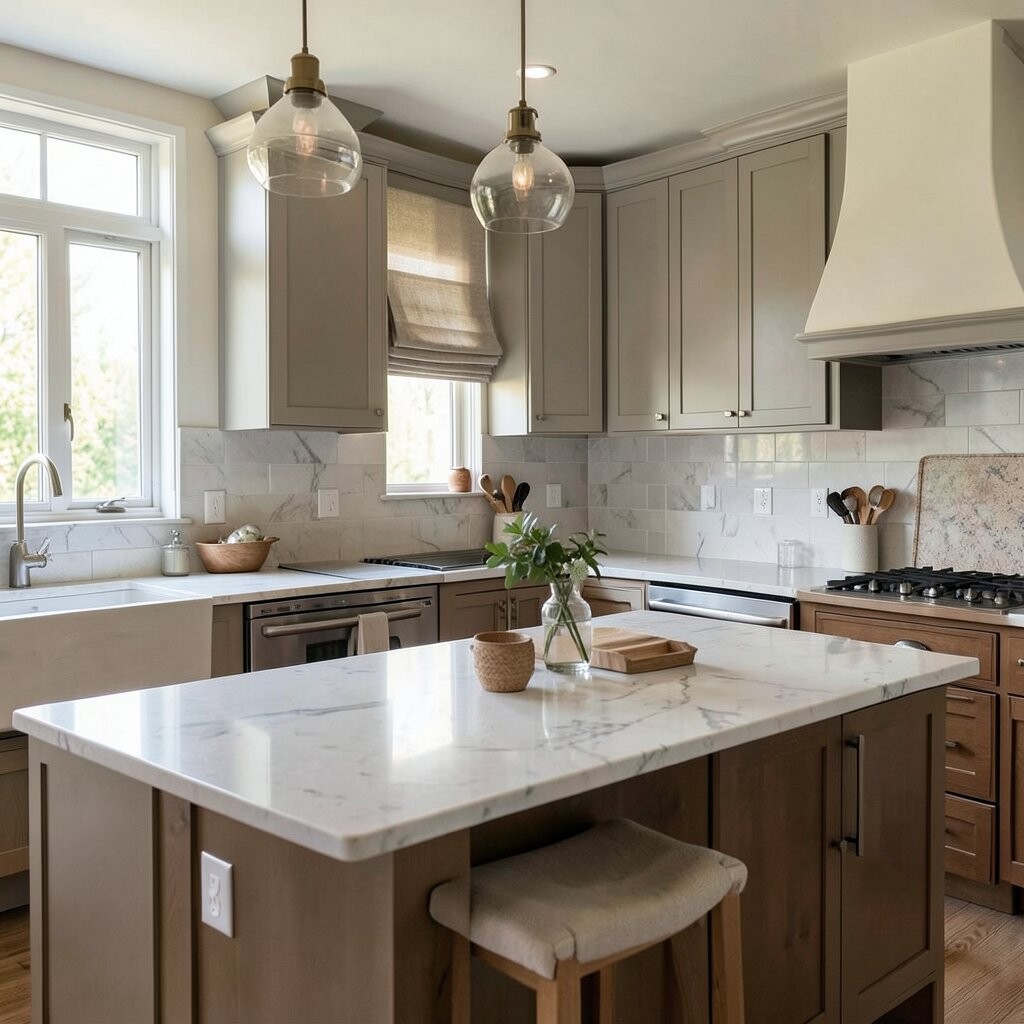
Paint chips and small samples can look very different once they are on your wall or cabinet. Put samples near your counters, floor, and appliances so you can see how they work together.
Check them in morning light, afternoon light, and at night. This simple step can save you from a bad match and help you feel sure about your choice.
Testing first is one of the best ways to keep costs down. It also gives you a better chance of ending up with a kitchen color plan that feels right for your home.